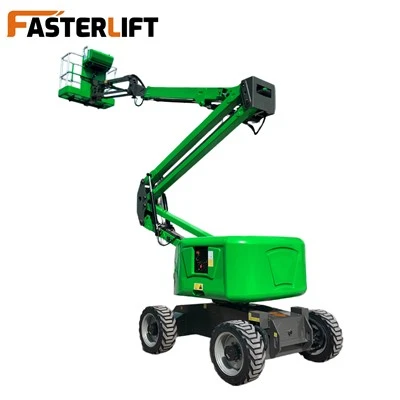
A crane works in concert through four main mechanisms: hoisting, traveling, luffing, and slewing. Utilizing the coordination of mechanical and electrical systems, it achieves vertical lifting and horizontal movement of heavy objects.
The working process of a crane is a cyclical action, mainly including picking up the object, lifting, moving, unloading, and returning to the original position. Its core principle is based on the combination of the lever principle, the force-saving mechanism of pulley systems, and the power transmission system, enabling it to lift objects several times or even tens of times its own power with relatively small driving force.
The entire workflow is as follows:
Hoisting Mechanism: As the most basic and important part of the crane, it uses an electric motor to drive the drum, which in turn drives the wire rope and pulley system to raise and lower the hook. The pulley system can multiply the force, saving up to 8 times the effort, allowing a 50-ton object to be lifted with only about 6 tons of pulling force.
Traveling Mechanism: Responsible for the longitudinal and lateral movement of the crane or trolley, realizing the horizontal transport of heavy objects. It comes in two forms: rail-mounted and railless.
Luffing mechanism: Primarily used in boom cranes, it adjusts the working radius by changing the boom's elevation angle or length, thus expanding the working range.
Slewing mechanism: Enables the superstructure (such as the boom) to rotate around a central axis, achieving 360° work coverage and improving flexibility.
Power sources are typically electricity or internal combustion engines. Modern cranes mostly use electric drives due to their cleanliness, efficiency, and ease of control. Control systems (such as load limiters and amplitude indicators) monitor the operating status in real time to ensure operational safety.