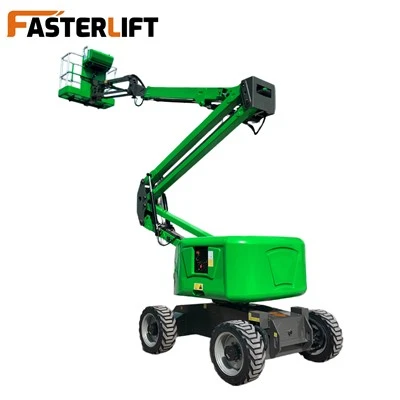
The hydraulic scissor lift is suitable for various high-altitude engineering operations and has multiple functions such as lifting engineering components, carrying personnel for high-altitude work, and lifting equipment and materials. It can improve the efficiency of climbing operations, improve the working environment at heights, and reduce high-altitude work accidents. It is one of the most common equipment in the current high-altitude vehicle rental market, with reliable safety guarantees. The emergency lowering rope, as one of its many safety protection functions, plays an indispensable role in ensuring the safety of high-altitude workers.
【1】 Normal situation:
During the high-altitude operation process, if using the 'enable key + down key' on the upper control panel fails to cause the platform to descend, then the ground operator needs to assist by pulling out the 'emergency lowering rope' to relieve the pressure and make the platform descend smoothly.
【2】 Unusual situation:
If the 'emergency lowering rope' cannot cause the platform to descend, how should it be handled?
In this case, the main reason may be that the oil cylinder does not relieve pressure. You can try loosening the oil cylinder locking valve and then pulling the 'emergency lowering rope' again to observe if the platform can descend normally.
Take a 10-meter fully automatic scissor high machine as an example:
① Prepare a 5mm hex socket wrench and a 17mm forked wrench
② Support the maintenance support pole, then find the lower oil cylinder locking valve of the fully automatic scissor lift, use the above two tools to slightly loosen the locking valve, then check if the equipment can descend normally; if still cannot descend, you can try loosening the locking valve again and observe if the platform can descend normally. Make a few small adjustments in multiple times until the equipment can descend.
If the platform still cannot descend after the operation, contact the after-sales staff for further handling.