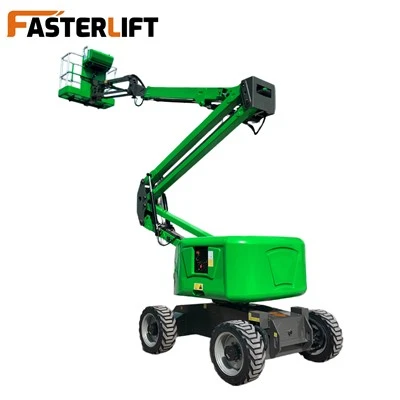
Before Operation
Operators must be trained, pass examinations and hold valid certificates before taking post.
Check that hydraulic oil, fuel oil and electrical systems meet requirements.
Before each shift handover, carefully inspect the aerial work platform. Check for cracked welds or other structural defects, hydraulic system leaks, cable damage, loose wire rope connections and tyre damage; test all control systems through operation to ensure all functions work properly.
Before using the aerial work platform, inspect the work area for hazards, such as trenches, steep slopes, cavities, rubble, overhead obstacles, high-voltage power lines and other potentially dangerous conditions.
During Operation
During each operation, the operator shall:
Maintain a safe distance from high-voltage power lines.
Only operate on firm and level ground.
Ensure the load on the platform and its distribution comply with the manufacturer's specifications.
Use outriggers or stabilizers in accordance with the instruction manual.
Ensure operators on the platform fasten their safety belts correctly.
For aerial work machinery permitted to operate while travelling, the operator shall, before and during travel:
Ensure the driving surface is firm and level.
Keep a safe distance from obstacles.
Stunt driving or any other reckless manoeuvring is prohibited
Personnel on the platform shall maintain a stable posture at all times during operation.
If any fault occurs during operation, the platform may only be restarted after the fault has been rectified.
Altering, modifying or disabling safety devices is prohibited.(
Prevent entanglement of wire ropes, electric wires, hoses and other components when the platform is lifting, lowering or moving.
Other Requirements
Fuel and Hydraulic Oil Tanks
Refuelling is not permitted while the engine is running.
Hydraulic oil must not be added during operation.
Battery Charging
Battery charging shall only be carried out in an open, well-ventilated area free of smoke and open flames.